Spread the love

Quantum Politics – President Bola Tinubu’s Lion vs Shrodingers Cat in Nigerian Politics in relation to Bribery & Corruption and its Adverse Effects on the Economy of an Oil Producing Nation with a focus on recent protests in Africas most populous nation

Schrödinger’s Cat

Schrödinger formulated this thought experiment in response to the Copenhagen interpretation of quantum mechanics, which states that a particle described by quantum mechanics exists in all possible states at the same time, until it is observed and is forced to choose one state. Here’s an example: consider a light that can light up either red or green. When we are not looking at the light, we assume that it is both red and green. However, when we look at it, the light must force itself to be either red or green, and that is the color we see.

Schrödinger did not agree with this interpretation. He created a different thought experiment, called Schrödinger’s Cat, to illustrate his concerns. In the Schrödinger’s Cat experiment, a cat is placed inside a sealed box with a radioactive substance and a poisonous gas. If the radioactive substance decayed, it would release the gas and kill the cat. If not, the cat would be alive.

Because we do not know whether the cat is alive or dead, it is considered both alive and dead until someone opens the box and sees for themselves what the state of the cat is. Thus, simply by looking into the box, someone has magically made the cat alive or dead even though that is impossible.

Erwin Rudolf Josef Alexander Schrödinger (born on August 12, 1887 in Vienna, Austria) was a physicist who conducted groundbreaking work in quantum mechanics, a field which studies how energy and matter behave at very small length scales. In 1926, Schrödinger developed an equation that predicted where an electron would be located in an atom. In 1933, he received a Nobel Prize for this work, along with physicist Paul Dirac.


A complex metaphor that blends quantum mechanics with political commentary,


“Schrödinger’s cat,” a famous thought experiment in quantum physics and the unpredictability or duality of political realities.
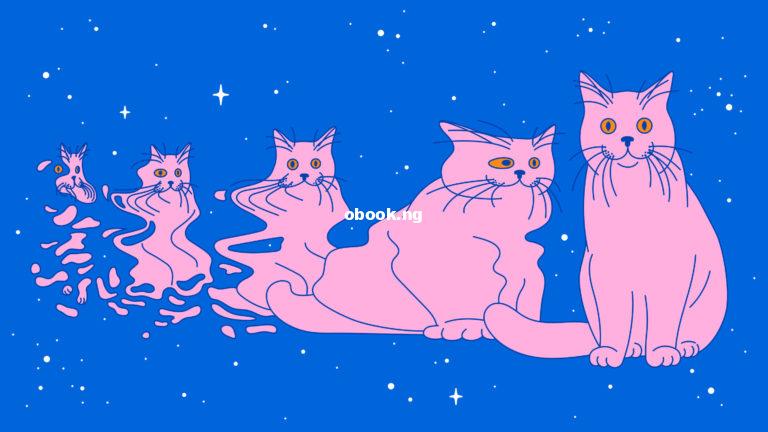
The metaphor you’re exploring uses the principles of quantum mechanics to describe the complexity and paradoxes in Nigerian politics, particularly under the leadership of President Bola Tinubu. This metaphor, involving Tinubu’s “Lion” and Schrödinger’s Cat, is applied to the persistent issues of bribery, corruption, and their impact on Nigeria’s economy, especially in the context of recent protests.

Quantum Politics in Nigeria: Tinubu’s Lion vs. Schrödinger’s Cat

  1. Tinubu’s Lion:
    • Bola Tinubu is often seen as a powerful political figure, embodying strength and authority—hence the “Lion” metaphor. As Nigeria’s President, he is expected to lead decisively, particularly in combating corruption and addressing economic challenges.
    • The “Lion” could represent the visible power and influence Tinubu wields in the political arena. However, in a country where corruption is deeply entrenched, this power might not always translate into effective governance or reform.
  2. Schrödinger’s Cat:
    • Schrödinger’s Cat in this context represents the uncertainty and duality in Nigerian politics. The cat is both alive and dead until observed, which mirrors the ambiguous and often contradictory nature of political promises and actions.
    • In terms of corruption, this could symbolize the uncertainty about whether efforts to combat corruption are genuinely effective or merely performative. Like the cat, the true state of governance might not be clear until a significant event “opens the box” and reveals the reality.
  3. Bribery, Corruption, and Economic Impact:
    • Corruption: Nigeria, as an oil-producing nation, has long struggled with corruption, which siphons resources away from public goods and services, leading to underdevelopment and economic disparity.
    • Economic Impact: The mismanagement of oil revenues due to corruption has adverse effects on the economy, including poor infrastructure, inadequate social services, and an inability to diversify the economy beyond oil. This results in high unemployment, inflation, and widespread poverty.
    • The Duality of Efforts: Efforts to fight corruption often seem to exist in a “superposition,” where they are simultaneously seen as both serious and ineffective. Political leaders might publicly denounce corruption while benefiting from the very system they criticize. The true effectiveness of anti-corruption measures often remains uncertain until a scandal or crisis forces transparency.
  4. Recent Protests in Nigeria:
    • The recent protests in Nigeria, often related to economic hardship, police brutality, or political disillusionment, reflect the growing frustration among the populace. Despite being Africa’s most populous nation and one of the largest oil producers, many Nigerians live in poverty.
    • Economic Discontent: These protests are fueled by the adverse effects of corruption on the economy, where the wealth generated from oil does not translate into improved living conditions for the majority. The disconnect between the country’s potential wealth and the reality of its citizens is stark.
    • Political Uncertainty: The protests also highlight the uncertainty and lack of trust in the political system. The government’s response can be seen as a quantum state, where its intentions are not fully understood until they manifest, often unpredictably.

The Larger Implications:

In the metaphor of “Quantum Politics,” Tinubu’s Lion represents the visible and forceful aspect of leadership, while Schrödinger’s Cat symbolizes the hidden, uncertain, and often paradoxical nature of political reality in Nigeria. Bribery and corruption remain persistent challenges that obscure the true state of the nation, much like the quantum state of Schrödinger’s Cat. The more citizens and observers try to understand or scrutinize the system, the more they encounter complexities that defy simple explanation—hence, “the more you look, the less you see.”

This duality complicates efforts to address corruption and its economic consequences. The recent protests are a manifestation of this complexity, where the populace demands transparency and effective governance but often faces a system that appears both reformist and corrupt simultaneously, depending on how it’s “observed” or interpreted.

The challenge for Nigeria, under Tinubu’s leadership, is to collapse this quantum superposition into a clear and decisive state where corruption is genuinely tackled, and economic growth benefits all, rather than just a privileged few. Until then, the nation’s politics and economy might continue to exist in this uncertain and paradoxical state.

Leave a Reply

Your email address will not be published. Required fields are marked *

Get Mobile Get Mobile
Get Mobile